
Water Mitigation vs. Water Restoration: What's the Difference?
You'll hear both terms after a water loss. Mitigation stops the damage; restoration rebuilds. Here's how the two phases fit together.
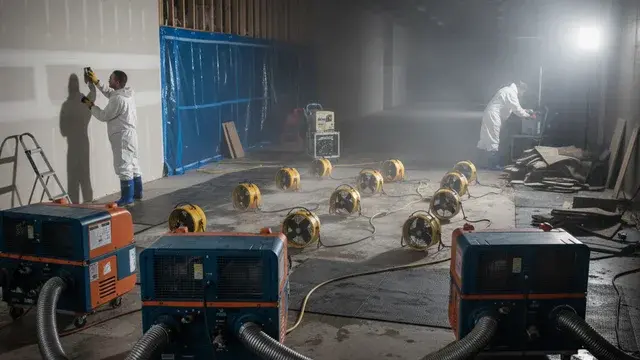
After a water loss, you'll hear two terms that sound similar but mean different things: mitigation and restoration. They're really two phases of the same recovery, and understanding the difference helps you know what's happening — and why the order matters.
Water Mitigation: Stop the Damage
Mitigation is the emergency phase. Its job is to stop the damage from getting worse: stopping the water source, extracting standing water, removing unsalvageable materials, and drying the structure. Mitigation is time-sensitive — the faster it starts, the less damage spreads. Insurers typically approve mitigation quickly because they understand the urgency.
Water Restoration: Put It Back Together
Restoration is the rebuild phase. Once the structure is dry and stable, restoration returns the property to its pre-loss condition — repairing or replacing drywall, flooring, trim, and paint, and finishing the space. Restoration scope and timeline vary more by carrier and complexity.
Why Having One Team Helps
When one company handles both mitigation and restoration, there's no gap between stopping the damage and rebuilding, no finger-pointing over what was or wasn't dried, and one point of contact for your insurance. Documentation flows straight from the drying phase into the rebuild scope.
How We Help in Baltimore
We handle both phases — emergency mitigation and full restoration — as a single Baltimore team, so your recovery never stalls between steps. Call us 24/7 when water damage strikes.
Need help with water damage in Baltimore?
Our team is open 24 hours for emergency water damage response across Baltimore, MD.