
How Thermal Imaging Helps Detect Hidden Moisture
Thermal cameras don't see water — they see temperature. Here's how they help find water damage you can't.
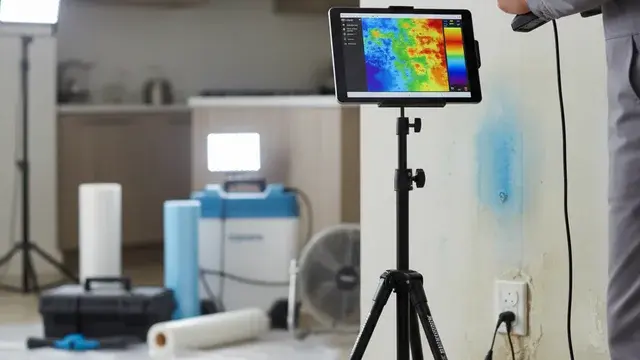
Thermal imaging cameras have become a core tool in water damage inspection. But they work in ways that aren't always obvious — and using them well takes training.
What Thermal Cameras Actually See
Thermal cameras don't see water. They see temperature. Wet materials are usually cooler than surrounding dry materials because evaporation pulls heat from the surface. That temperature difference shows up as a darker, cooler area on the thermal image.
Why It Matters for Water Damage
Thermal imaging lets us scan large wall and ceiling areas quickly, spotting anomalies that suggest hidden moisture. Then we verify with moisture meters. Without thermal, we'd be checking every few feet of wall manually and likely missing things.
Where Thermal Imaging Finds What You Can't
- Water migrating behind drywall from an upstairs leak
- Wet insulation inside walls
- Moisture above ceiling tiles
- Slab leaks under tile or wood floors
- Condensation problems in crawl spaces and attics
The Limits
Thermal imaging has real limitations. It can't see through thick materials. Temperature differences fade as materials dry or if they're already cool. It detects temperature anomalies — not water specifically — so trained interpretation matters.
Why We Combine Tools
A thorough moisture inspection uses three tools together: thermal imaging to find anomalies, penetrating and non-penetrating moisture meters to confirm actual water content, and hygrometers to measure relative humidity in spaces.
Need help with water damage in Baltimore?
Our team is open 24 hours for emergency water damage response across Baltimore, MD.