
Emergency Water Extraction Explained
Every minute standing water sits, damage spreads. Here's what professional extraction actually does.
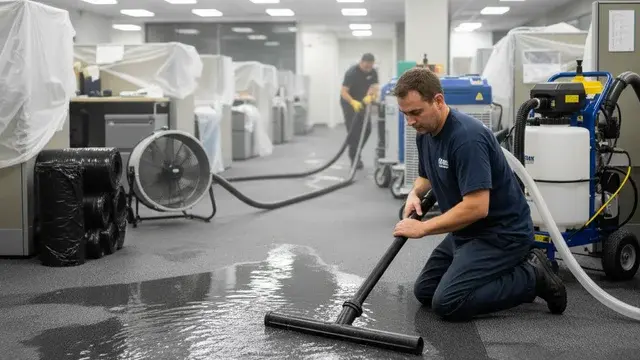
When we say 'water extraction,' we don't mean a mop and a bucket. Professional extraction uses commercial equipment that removes hundreds of gallons per hour — the difference between a salvageable floor and a total rebuild.
Why Speed Matters
Within minutes of water hitting a floor, it starts to:
- Wick up into baseboards and walls
- Soak carpet pad and subfloor
- Migrate through cracks to lower floors
- Start breaking down adhesives in laminate and engineered wood
Every hour of delay adds to the damage. That's why 'emergency' isn't just marketing — it's the actual difference in restoration outcomes.
The Equipment
Truck-Mounted Extractors
The most powerful option — high-capacity vacuum units that pull water through hoses from inside the home. Used for large losses where volume matters.
Portable Extractors
Wheeled units that go where trucks can't — upper floors, apartments, tight row homes. Still far more powerful than any household wet/dry vac.
Weighted Extraction Wands
Used on carpet. The weight presses the wand into the carpet so water is pulled out of both the fibers and the pad below.
What Happens After Extraction
Extraction removes bulk water. But residual moisture in walls, subfloors, and materials requires drying with air movers and dehumidifiers. Extraction is step one — drying is step two.
Need help with water damage in Baltimore?
Our team is open 24 hours for emergency water damage response across Baltimore, MD.