
Water Heater Leaks and Flooding: What Baltimore Homeowners Should Do
Water heaters usually fail without much warning — and a burst tank can release 40 to 80 gallons. Here's how to respond and prevent it.
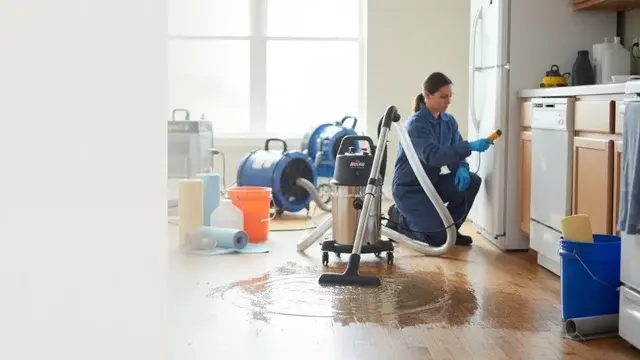
A water heater holds 40 to 80 gallons under constant pressure and heat, and most sit in a basement or utility closet where a slow leak can go unnoticed for weeks — or fail all at once and flood the floor. Because tanks usually give little warning, knowing the signs and having a plan makes the difference between a quick fix and a major cleanup.
Why Water Heaters Fail
- Age — most tanks last 8 to 12 years, and internal corrosion accelerates near the end.
- Sediment buildup — mineral sediment overheats the bottom of the tank and weakens the steel.
- A failed or leaking temperature-and-pressure (T&P) relief valve.
- Corroded fittings, connections, or the drain valve.
- A rusted-through tank bottom — the classic sudden burst.
Warning Signs to Watch For
Catch a failing heater before it floods by watching for rusty or discolored hot water, water pooling around the base, dampness or corrosion on the tank, popping or rumbling noises, or a tank that's more than a decade old. Any moisture around the unit is a reason to have it checked.
What to Do If It Leaks or Bursts
- Shut off the water — use the cold-water valve on top of the heater, or your main valve if you can't reach it.
- Turn off the power to the unit — flip the breaker for an electric heater, or set a gas heater's valve to 'pilot' or 'off.'
- Move belongings out of the water and document the damage with photos and video.
- Don't touch standing water near electrical connections until power is off.
- Call a restoration team to extract the water and dry the structure before it wicks into walls and subfloor.
Preventing the Next One
Flush your tank once a year to clear sediment, test the T&P valve, and replace the anode rod on schedule to slow corrosion. If your heater is over ten years old, budget to replace it proactively — and consider a drip pan with a drain or a leak sensor for early warning. A little maintenance is far cheaper than a flooded basement.
How We Help in Baltimore
When a water heater floods a Baltimore basement or utility room, we extract the water, dry the structure with commercial equipment, check for hidden moisture, and repair the damage — coordinating with your insurance along the way. We're available 24/7 across Baltimore City and Baltimore County.
Need help with water damage in Baltimore?
Our team is open 24 hours for emergency water damage response across Baltimore, MD.