
What to Do After a Toilet Overflow
Toilet overflows range from a quick cleanup to a Category 3 sewage event. Here's how to know which one you have.
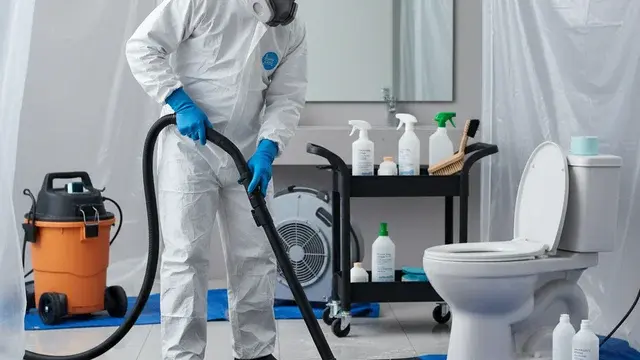
A toilet overflow can be minor or a major sewage event. The right response depends on what kind of water is involved.
Step 1: Stop the Flow
- Remove the tank lid and press the flapper down to stop water from refilling the bowl.
- Shut off the toilet's water supply valve (usually behind and below the tank).
- If the water is rising with sewage coming up from the drain, don't flush anything else in the house.
Step 2: Assess the Water
Is it clean water from the tank, or contaminated water from the bowl or sewer line? This determines everything about the cleanup:
- Clean tank water = Category 1 (minimal risk, standard cleanup)
- Water with toilet contents = Category 3 (black water, professional cleanup required)
- Sewer backup coming up through the toilet = Category 3
Step 3: Contain and Document
Block off the area. Photograph everything. If it's a Category 3 event, don't clean it yourself without PPE — the bacteria and pathogens are serious.
Step 4: Call for Help
For anything beyond a small, clean-water overflow, call a professional restoration team. Category 3 cleanup requires proper PPE, containment, EPA-registered disinfectants, and removal of porous contaminated materials.
Don't Forget the Room Below
Overflow water travels through the floor faster than you'd expect. Check the ceiling below the affected bathroom — water can reach it within minutes.
Need help with water damage in Baltimore?
Our team is open 24 hours for emergency water damage response across Baltimore, MD.