
What Happens During Structural Drying?
Structural drying is the most critical step in water damage restoration. Here's what happens and why it matters.
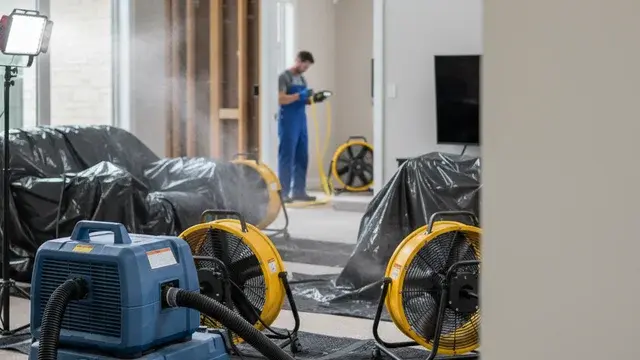
Water extraction is just the beginning. Structural drying is what actually saves your home — and it's where professional restoration separates from 'we'll just let it air dry.'
Step 1: Moisture Mapping
We start by measuring moisture in every potentially affected material — drywall, studs, subfloor, flooring, trim. Thermal imaging shows temperature differences that suggest hidden moisture. Meters confirm actual readings.
Step 2: Equipment Placement
Industrial air movers are placed to create a horizontal airflow that evaporates water from surfaces. Industrial dehumidifiers pull the evaporated moisture from the air so it doesn't just re-settle.
Step 3: Daily Monitoring
We check moisture readings every day and adjust equipment placement. Materials drying faster than expected might get less equipment; areas drying slowly might need additional air movers or specialty drying.
Step 4: Specialty Drying
Some materials need specialty equipment. Hardwood floors often need drying mats that pull moisture from the top. Wall cavities behind baseboards might need injection drying. Concrete slabs can need heated or desiccant drying.
Step 5: Dry Standard Verification
We don't remove equipment until moisture readings are back to the 'dry standard' — comparable to unaffected areas in the same home. This is documented for the final report and insurance.
Why DIY Drying Fails
Household fans and dehumidifiers are nowhere near the capacity of commercial equipment. Even running 24/7, they can't keep up with a meaningful water loss, and materials stay damp long enough for mold to start.
Need help with water damage in Baltimore?
Our team is open 24 hours for emergency water damage response across Baltimore, MD.