
Subfloor Water Damage: Signs, Risks, and Repair
The damage you can't see is often the worst. Here's how to spot subfloor water damage under your floors — and what it takes to fix it right.
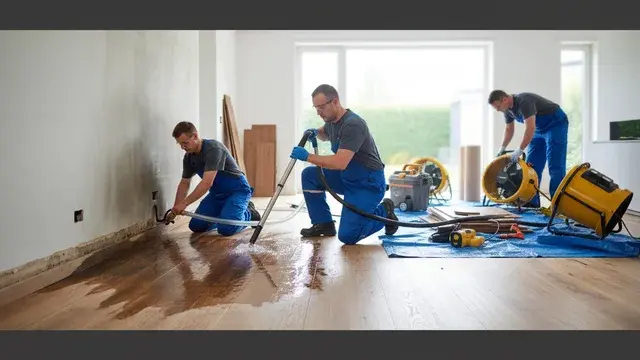
When water damages a floor, the finished surface gets the attention — but the real problem is often underneath, in the subfloor. The subfloor is the structural layer your flooring sits on, and once it's saturated, it can warp, weaken, and grow mold out of sight. Catching subfloor water damage early determines whether it can be dried or has to be replaced.
Signs of Subfloor Water Damage
- Soft, spongy, or sinking spots when you walk across the floor
- New or worsening squeaks and creaks
- Cupping, buckling, or lifting of the flooring above
- A musty smell rising from the floor
- Visible staining, or gaps opening between boards or tiles
- Floors that feel uneven or bouncy
Why It's Easy to Miss
The subfloor is sealed under carpet, hardwood, laminate, or tile, so water can soak it without obvious signs until damage is advanced. Moisture also travels — a leak in one room can reach subfloor several feet away. That's why professionals use moisture meters and thermal imaging to map the true extent.
Dry or Replace?
Plywood and OSB subfloor caught early can often be dried in place and saved. Subfloor that has swelled significantly, delaminated, or stayed wet for days — or been soaked by Category 3 water — usually has to be cut out and replaced. Moisture readings guide the call, so only what must go is removed.
How We Help in Baltimore
We map hidden moisture, dry subfloors to a verified standard where possible, and replace only what can't be saved — then restore the finished floor on top. If your floors feel soft, squeaky, or smell musty after a leak, call us for an inspection.
Need help with water damage in Baltimore?
Our team is open 24 hours for emergency water damage response across Baltimore, MD.