
Kitchen Appliance Leak Cleanup Guide
Kitchen appliance leaks are one of the most common sources of water damage. Here's how to handle them.
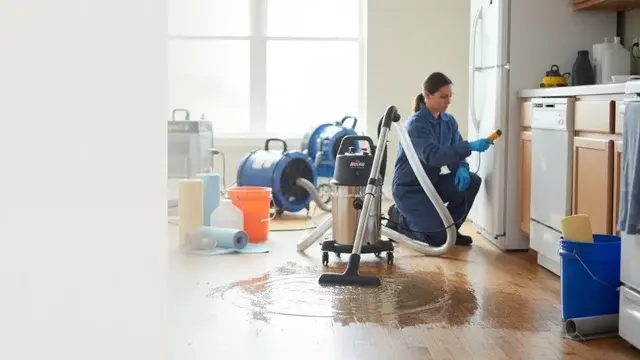
Kitchens have more water connections than almost any room — dishwasher, refrigerator ice maker, under-sink plumbing, and sometimes a disposal. When one fails, the damage can spread fast and hide under cabinets or flooring.
Common Culprits
Dishwasher
Door gaskets wear out and leak onto the floor. Drain hoses can come loose and leak into the cabinet beside the dishwasher. Supply lines can fail behind the unit.
Refrigerator
The water line to the ice maker runs behind the fridge and is one of the most overlooked leak sources. A slow drip can damage subfloor for months without being noticed.
Under-Sink Plumbing
Corroded P-traps, loose supply connections, and worn garbage disposal seals all cause slow leaks that ruin cabinet bases.
What to Do
- Shut off water to the appliance (or the whole kitchen line).
- Pull the appliance away from the wall to assess the leak.
- Photograph everything before you start cleaning.
- Remove items from under-sink cabinets and wipe them down.
- Look for warped cabinet bases, stained flooring, or wet baseboards.
Hidden Damage to Watch For
- Warped or delaminating flooring near appliances
- Swollen cabinet toe kicks
- Ceiling stains in the room below the kitchen
- Musty smell under the sink or near appliances
Need help with water damage in Baltimore?
Our team is open 24 hours for emergency water damage response across Baltimore, MD.